Building a mobile app is an exciting step for any startup, but a promising idea does not automatically become a successful product. Many founders approach a Mobile App Development Company in Riyadh with a list of features before understanding what their customers actually need. Good software development starts with a clear problem, a realistic budget, and a plan for turning an idea into something people will use.
For Saudi startups, there are also local expectations to consider, including Arabic-language support, familiar payment options, and responsible handling of customer information. Avoiding a few common mistakes early can save money, reduce delays, and make the finished app more useful.
1. Starting Development Without Validating the Idea
One of the biggest mistakes startups make is assuming that customers want an app simply because the business idea sounds promising.
Before investing in development, founders should confirm that a real problem exists and that their proposed solution makes sense to potential users.
For example, a Riyadh startup planning a home maintenance booking app should first speak with homeowners and service providers. Do customers struggle to find reliable technicians? Would they prefer an app over WhatsApp or a website?
These conversations can reveal whether the proposed product solves a meaningful problem.
How to avoid this mistake:
- Interview potential customers before development.
- Study existing alternatives and their limitations.
- Test the concept using a simple prototype.
- Identify the main problem the first version must solve.
Customer feedback should influence the product before expensive development decisions are made.
2. Adding Too Many Features to the First Version
A common startup mistake is trying to build a complete platform immediately.
Founders often request advanced dashboards, loyalty programs, artificial intelligence, social features, and multiple integrations before testing whether users need the basic service.
This increases development costs and makes testing more complicated.
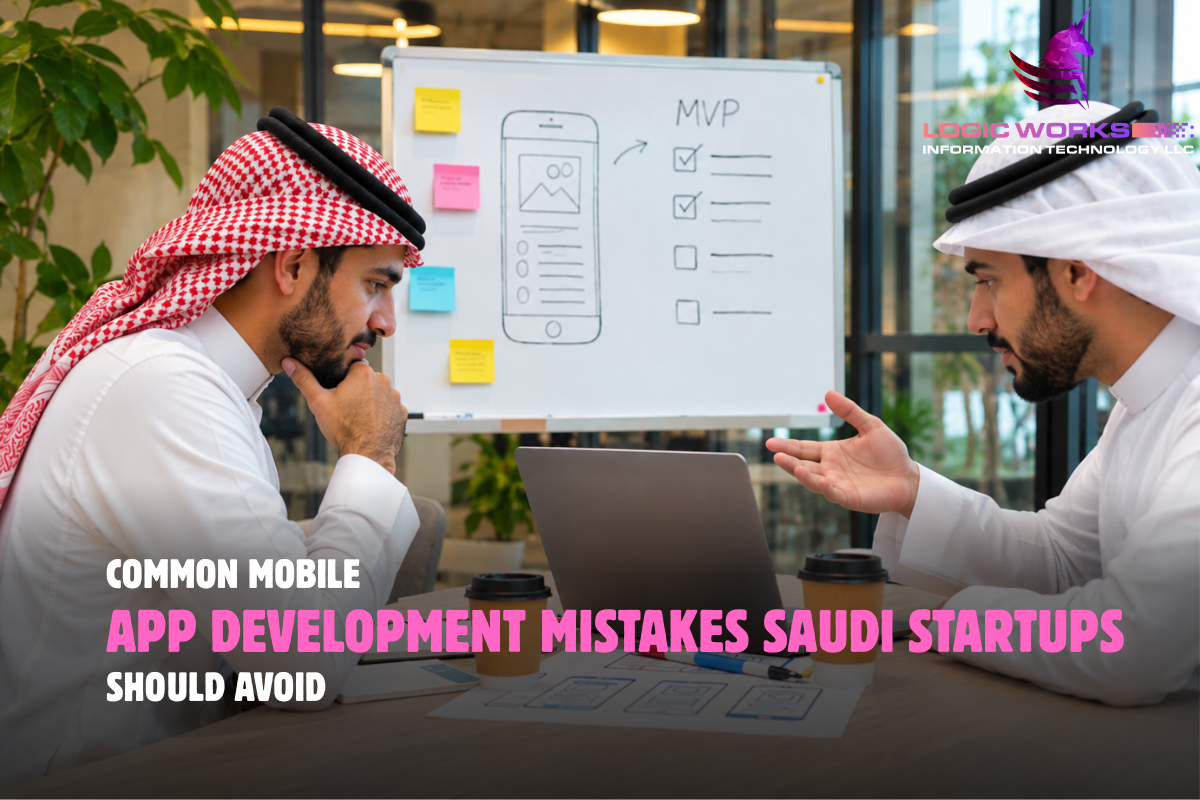
Why Should Startups Build an MVP First?
A minimum viable product (MVP) is an early version of an application containing the essential features needed to test its main value with real users. It helps startups collect feedback before committing resources to a larger product.
Consider a food delivery startup. Its first release might need restaurant listings, ordering, payments, and delivery tracking. Advanced loyalty programs can wait until customers demonstrate a need for them.
The goal is not to build a poor-quality app. It is to build a focused one.
3. Underestimating the Total App Development Budget
Many founders calculate their budget around the initial development quote and forget the expenses that follow.
Mobile app development costs can include design, testing, hosting, third-party services, security, app store accounts, and ongoing maintenance.
A startup that spends its entire budget on the first release may struggle to fix problems or respond to customer feedback.
What Should a Startup App Budget Include?
| Expense | What It Covers |
| Planning and design | User research, prototypes, and interface design |
| Development | Frontend, backend, and integrations |
| Quality testing | Bug fixes, performance, and device compatibility |
| Infrastructure | Hosting, databases, and third-party services |
| Maintenance | Security updates, improvements, and ongoing support |
Founders should also reserve a contingency budget for unexpected changes.
A realistic budget considers the complete product lifecycle, not just the launch date.
4. Ignoring Arabic User Experience and Local Preferences
An app designed for Saudi Arabia should reflect how its intended audience reads, navigates, and makes purchases.
Arabic support involves more than translating English text. Right-to-left layouts can affect navigation, icons, forms, and the placement of interface elements.
For example, an Arabic checkout screen may require different alignment and navigation behavior from its English equivalent.
Startups should also consider familiar local payment methods. Saudi Arabia’s mada payment network supports electronic payments, including e-commerce transactions.
Practical steps include:
- Test Arabic and English interfaces separately.
- Support right-to-left layouts where appropriate.
- Use clear, culturally relevant language.
- Evaluate payment methods suitable for Saudi customers.
- Test forms, dates, addresses, and notifications with local users.
These details make an application easier to use and reduce avoidable frustration.
5. Choosing Technology Before Understanding the Product
Some startups choose a development framework because it is popular rather than because it fits their requirements.
Native development uses platform-specific technologies, such as Swift for iOS and Kotlin for Android. Cross-platform frameworks, including Flutter and React Native, allow teams to share substantial portions of their code across platforms.
Neither approach is automatically better.
A straightforward booking application may benefit from cross-platform development. An app requiring specialized device functionality may need a different approach.
Before choosing technology, founders should consider performance requirements, available budget, future integrations, and long-term maintenance.
The right technical decision supports the product’s needs rather than following a trend.
6. Treating Security and Data Privacy as Later Problems
Startups often focus on visible features while overlooking how customer information is collected, stored, and protected.
This becomes especially important for applications handling personal details, location information, financial transactions, or sensitive customer records.
Saudi Arabia’s Personal Data Protection Law (PDPL) establishes requirements for processing personal data. Startups should assess which obligations apply to their activities before collecting user information.
Basic security planning should include:
- Collecting only necessary customer information.
- Using secure authentication and access controls.
- Protecting data during transmission and storage.
- Reviewing third-party integrations.
- Establishing appropriate privacy notices and data retention practices.
Security should be part of the development process from the beginning, not an additional feature after launch.
7. Skipping Testing to Launch Faster
A mobile application may work perfectly on a developer’s device and still fail when customers begin using it.
Different screen sizes, operating systems, internet connections, and user behaviors can expose unexpected problems.
For example, a shopping app might perform well on Wi-Fi but struggle during checkout on a slower mobile connection.
Testing should cover the entire customer journey, including registration, navigation, payments, notifications, and account recovery.
What Should Startups Test Before Launch?
Start with these essential checks:
- Confirm that core features work correctly.
- Test the app on different devices and screen sizes.
- Check performance under realistic network conditions.
- Review Arabic and English interfaces.
- Test payment failures and error messages.
- Fix critical security and usability issues.
A smaller, stable release is usually more valuable than a feature-heavy app that customers cannot rely on.
8. Launching Without a Plan for Improvement
Publishing an app on the Apple App Store or Google Play is a milestone, not the end of development.
Real users may interact with the product differently from what the team expected. Some features will prove useful, while others may create confusion.
Startups should monitor meaningful indicators such as registration completion, feature usage, customer retention, and technical errors.
For example, if users regularly abandon the registration process, the problem may involve excessive form fields or unclear instructions.
Reviewing these patterns helps teams decide what to improve next.
At Logic Works Information Technology, we believe thoughtful app planning should connect business goals with user needs, practical development decisions, and long-term product improvement.
How Can Saudi Startups Avoid These Mistakes?
The most effective approach is to make important decisions before committing to full-scale development.
Start with customer research, define a focused MVP, establish a realistic budget, and choose technology based on actual requirements. Then prioritize local usability, data protection, and testing.
Once the app launches, use customer feedback and product analytics to guide future updates.
A successful mobile application does not need every possible feature. It needs to solve a real problem consistently and give users a reason to return.
Frequently Asked Questions
What is the biggest mistake startups make in mobile app development?
Building an app without validating customer demand is one of the most costly mistakes. Startups should research their audience, test their assumptions, and confirm the problem before investing heavily in development.
How can Saudi startups reduce app development costs?
Start with a focused MVP, prioritize essential features, avoid unnecessary integrations, and establish a clear project scope. Testing early can also reduce expensive changes later.
Is an MVP necessary for every startup?
Not every product requires the same MVP approach, but testing essential functionality before a major investment is valuable for most startups. It helps founders understand customer needs and reduce uncertainty.
Should Saudi mobile apps support Arabic and English?
Language support should reflect the target audience. Many Saudi-facing applications benefit from Arabic interfaces, while English may help serve additional customer groups. Proper right-to-left design is important for Arabic usability.
How long does it take to develop a startup mobile app?
Development time depends on complexity, integrations, design requirements, and testing. A focused MVP may take a few months, while larger applications can require substantially longer.
What should startups do after launching their mobile app?
Monitor technical performance, collect user feedback, review engagement data, and prioritize improvements. Regular security updates and compatibility testing also help keep the application reliable.