

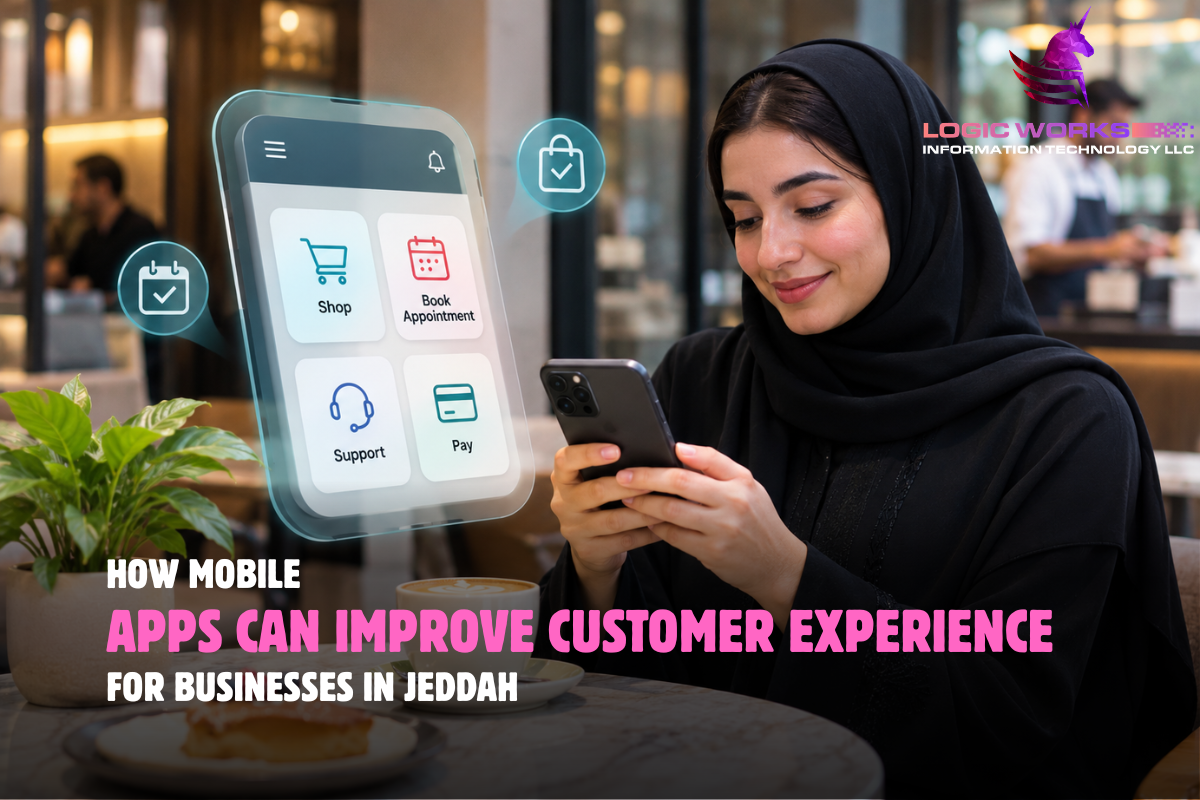
Customers expect businesses to make everyday tasks simple. Whether they want to book an appointment, order food, check product availability, or contact customer support, convenience often shapes their experience. For businesses exploring a Mobile App Development Company in Jeddah, the real goal should be more than launching an application. It should be creating a useful digital experience that makes interactions easier, faster, and more reliable.
As businesses in Saudi Arabia continue adopting digital services, mobile apps offer practical ways to improve customer relationships. However, an app only adds value when it addresses genuine customer needs. Understanding where mobile technology can improve the customer journey is an important starting point.
Why Is Mobile Customer Experience Important for Jeddah Businesses?
Mobile customer experience refers to how easily customers can interact with a business through a smartphone application, from their first visit to ongoing support.
For businesses in Jeddah, a well-designed app can simplify communication, reduce unnecessary steps, and provide customers with greater control over their interactions.
Consider a local restaurant that receives orders through phone calls and messaging platforms. Customers may need to wait for confirmation or repeatedly ask about delivery progress. A mobile ordering app can bring menus, payments, order confirmation, and delivery updates into one place.
The improvement comes from making the process more predictable and convenient, not simply replacing one communication channel with another.
1. Make Products and Services Easier to Access
Customers appreciate being able to find information without calling a business or visiting its location.
A mobile app can provide immediate access to product catalogs, service descriptions, prices, business hours, and availability.
For example, a retail business in Jeddah could allow customers to browse products, check available sizes, and save items for later.
A home maintenance provider could display its services, estimated appointment availability, and booking requirements.
Useful accessibility features include:
- Clear navigation and organized categories.
- Search and filtering options.
- Updated product or service information.
- Accessible text and readable layouts.
- Arabic and English language options where appropriate.
The goal is to help customers complete common tasks with minimal effort.
2. Simplify Appointments and Reservations
Appointment booking is one of the most practical uses of mobile applications for service businesses.
Salons, fitness centers, clinics, and professional service providers can use booking features to reduce scheduling confusion.
How Do Mobile Booking Apps Improve Customer Satisfaction?
Mobile booking apps allow customers to view available appointments, select convenient times, receive confirmations, and manage reservations without waiting for staff assistance. When connected to an accurate scheduling system, they can also reduce double bookings and make appointment management easier for businesses.
For example, a Jeddah fitness studio could let members reserve classes, view upcoming sessions, and receive reminders.
A good booking experience should also make cancellations and rescheduling straightforward.
3. Provide More Relevant Customer Experiences
Personalization can make an application more useful when it responds to customer preferences and previous interactions.
Instead of showing every customer identical information, businesses can offer relevant recommendations, saved preferences, and convenient shortcuts.
An online grocery business, for example, might allow returning customers to reorder frequently purchased products.
A clothing retailer could let customers save preferred sizes and favorite items.
However, personalization should remain helpful rather than intrusive.
Businesses should explain how customer information is used, provide appropriate privacy controls, and follow applicable data protection requirements.
Saudi Arabia’s Personal Data Protection Law (PDPL) is an important consideration for organizations processing personal data.
4. Improve Customer Communication and Support
Poor communication can turn a small inconvenience into a frustrating customer experience.
Mobile applications can make it easier for customers to ask questions, report problems, and receive updates.
Which Customer Support Features Are Most Useful?
The most useful features depend on the business, but commonly include in-app messaging, support requests, order updates, searchable help sections, and clear contact options.
For example, a delivery business could notify customers when an order is confirmed, dispatched, or delayed.
A service company could allow customers to upload photographs when reporting a maintenance issue.
Push notifications should be relevant and limited. Sending too many promotional messages can lead customers to disable notifications or stop using the app.
5. Make Payments and Checkout More Convenient
A complicated checkout process can discourage customers from completing purchases.
Mobile applications can simplify transactions by reducing unnecessary form fields, displaying clear pricing, and supporting suitable payment options.
In Saudi Arabia, businesses may consider locally familiar payment methods, including mada, depending on their payment provider and business requirements.
What Makes a Good Mobile Checkout Experience?
A good checkout experience clearly displays the order summary, total amount, delivery information, and available payment methods before customers confirm a purchase.
It should also explain payment errors and provide a straightforward way to retry unsuccessful transactions.
For Jeddah retailers, restaurants, and delivery services, these improvements can make purchasing more convenient and reduce avoidable checkout problems.
6. Build Customer Loyalty Through Useful Features
Customer loyalty depends on the overall experience, not just discounts.
A mobile app can encourage repeat interactions by making useful services easier to access.
For example, a coffee shop might offer digital reward points, while a beauty salon could provide appointment history and simple rebooking.
Businesses can also offer relevant promotions to customers who choose to receive them.
| Mobile App Feature | Customer Benefit |
| Digital loyalty rewards | Easier tracking of rewards and benefits |
| Saved preferences | Less repetitive information entry |
| Order history | Convenient repeat purchases |
| Appointment reminders | Fewer missed bookings |
| Personalized offers | More relevant promotions |
Loyalty features work best when customers understand their value and can use them without unnecessary steps.
7. Design for Arabic and English Users
Language and interface design can influence whether customers feel comfortable using an application.
Businesses serving Jeddah’s diverse customer base should consider which languages their audience prefers.
Arabic support requires more than translating text. Right-to-left layouts may affect navigation, icons, forms, and the positioning of interface elements.
For example, a checkout flow designed for English users may need layout adjustments to work naturally in Arabic.
Testing both language versions with real users can reveal problems that automated translation cannot identify.
A familiar, readable interface helps customers complete tasks with greater confidence.
8. Use Customer Feedback to Improve the App
Customer experience does not stop improving once an application launches.
Businesses should regularly review feedback and observe how customers use important features.
Useful performance indicators include:
- Successful booking or purchase completion.
- Customer retention and repeat usage.
- App crashes and technical errors.
- Customer support requests.
- Abandoned registration or checkout processes.
For example, if customers frequently leave an app during account registration, the process may require too much information.
A business can test a simpler registration flow and compare completion rates.
This approach turns customer feedback into practical improvements rather than relying on assumptions.
How Can Jeddah Businesses Plan a Customer-Focused Mobile App?
Before investing in mobile app development, businesses should identify the customer problems they want to solve.
A practical planning process includes:
- Understand customer needs. Identify common complaints, repetitive tasks, and service delays.
- Prioritize essential features. Focus on functions that directly improve the customer journey.
- Map the user experience. Make important tasks simple and easy to complete.
- Choose suitable technology. Consider performance, integrations, security, and future maintenance.
- Test with real users. Collect feedback before releasing the application widely.
- Measure results after launch. Improve features based on customer behavior and business goals.
At Logic Works Information Technology, the approach to mobile application planning should begin with understanding how people interact with a business. Thoughtful software development connects those customer needs with practical features, accessible design, and reliable performance.
An app should make the business easier to use, not introduce another complicated process.
Final Thoughts
Mobile apps can help Jeddah businesses create better customer experiences by removing friction from everyday interactions.
Faster bookings, simpler payments, relevant communication, and accessible design can make services more convenient. Yet the most valuable features are not necessarily the most advanced ones.
Businesses should start by understanding what customers need, build around those priorities, and continue improving the experience after launch.
When mobile technology solves real problems, it becomes a useful part of the customer relationship rather than just another digital channel.
Frequently Asked Questions
How do mobile apps improve customer experience?
Mobile apps improve customer experience by making services easier to access, simplifying purchases and appointments, providing timely updates, and supporting personalized interactions. Their effectiveness depends on usability, reliability, and how well they address actual customer needs.
Which businesses in Jeddah can benefit from mobile apps?
Retail stores, restaurants, fitness centers, salons, delivery providers, and appointment-based businesses may benefit from mobile applications. The strongest opportunities exist where an app can simplify frequent customer interactions or improve an existing service process.
Can a mobile app help a small business retain customers?
Yes. Features such as repeat ordering, appointment reminders, loyalty rewards, and saved preferences can encourage customers to return. However, retention also depends on product quality, service reliability, and overall customer satisfaction.
Should businesses in Saudi Arabia offer Arabic-language apps?
Businesses should consider Arabic support when serving Arabic-speaking customers. Proper translation, right-to-left navigation, and locally appropriate interface design can improve accessibility. English support may also be useful depending on the target audience.
What features should a customer-focused mobile app include?
Essential features depend on the business model. Common priorities include intuitive navigation, clear service information, secure account access, convenient booking or purchasing, customer support, and reliable notifications.
How can businesses measure customer satisfaction through a mobile app?
Businesses can use customer surveys, feedback forms, retention data, task completion rates, and support requests. Combining customer feedback with usage analytics helps identify problems and prioritize improvements.
Is a mobile app better than a mobile-friendly website?
Not always. A mobile-friendly website may be sufficient for businesses that mainly provide information or receive occasional inquiries. A mobile app may offer additional value when customers frequently book services, place orders, manage accounts, or use personalized features.