


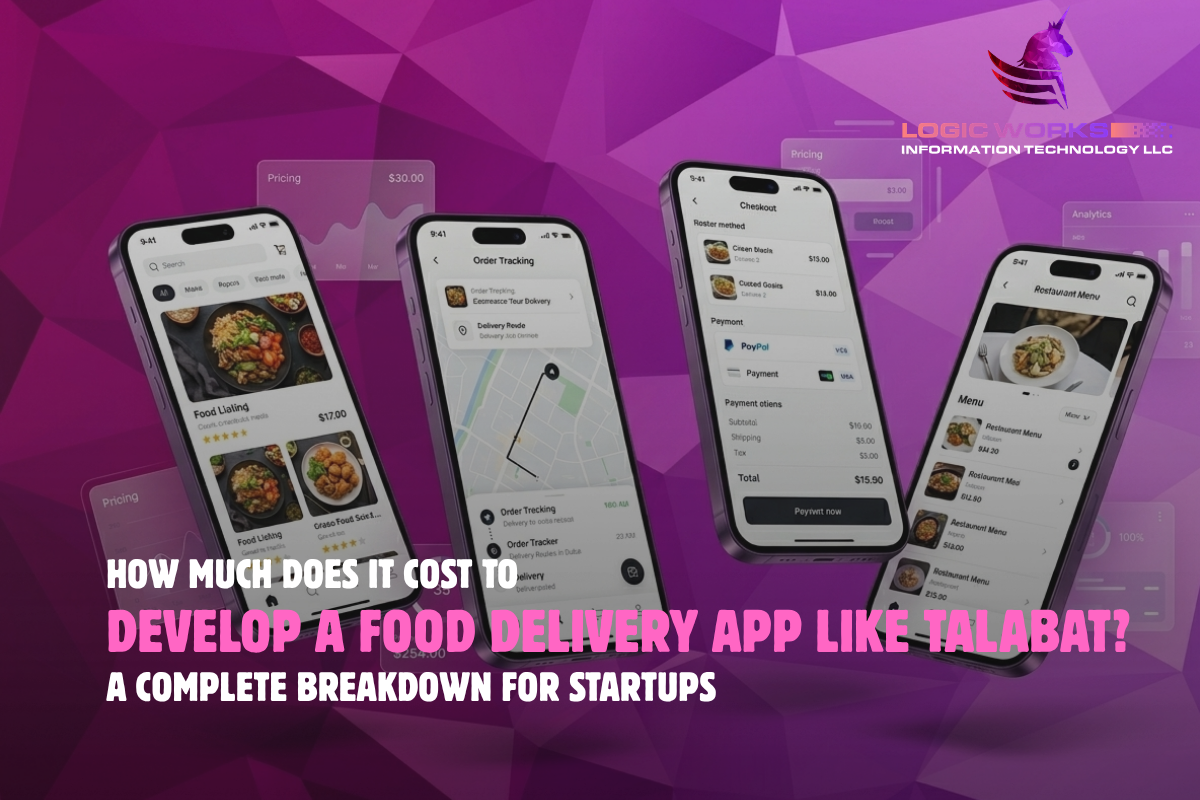
If you are a startup founder or business owner in Dubai thinking about launching a food delivery app, Talabat is probably the benchmark in your head. It dominates the GCC food delivery market, processes millions of orders, and delivers a seamless user experience. So the question that naturally follows is: how much does it actually cost to build something like that?
The honest answer is, it depends. But that is not where we stop. This guide breaks down every cost factor clearly so you can walk away with a realistic number and a smart development plan.
Why the Food Delivery App Market in the UAE Is Worth Entering
The online food delivery market in the Middle East and North Africa is projected to surpass $8 billion by 2028, with the UAE among the fastest-growing contributors. Talabat, Deliveroo, and Noon Food dominate the space but there is clear room for niche, localized, and vertically focused platforms.
Dubai’s restaurant-dense landscape, high smartphone penetration, and appetite for on-demand services make it one of the best markets to launch a food delivery application. The demand is real. The challenge is building it cost-effectively without cutting corners.
What Goes Into the App Development Cost of a Food Delivery Platform?
App development cost for a food delivery platform is not a single number. It is the sum of multiple moving parts each adding to the feature set, complexity, and ultimately the budget.
The Three Panels You Need to Build
Every food delivery app like Talabat is not one app. It is three separate panels working together:
1. Customer App — where users browse restaurants, place orders, track delivery in real time, and make payments.
2. Restaurant/Vendor Panel — where restaurant partners manage menus, accept or reject orders, and track their performance.
3. Delivery Driver App — where delivery partners receive order requests, navigate to pick-up and drop-off points, and manage their earnings.
Each panel adds to the overall mobile app development cost. If you plan to launch on both iOS and Android, multiply that by two unless you use cross-platform frameworks like Flutter or React Native, which reduce cost significantly.
App Development Cost Breakdown by Feature
Here is a realistic cost breakdown based on what each feature set typically requires to build:
Core Features (MVP Stage)
| Feature | Estimated Cost Range (USD) |
| User registration and profiles | $1,500 – $3,000 |
| Restaurant listings and menus | $2,000 – $4,000 |
| Search and filters | $1,500 – $3,500 |
| Cart and checkout flow | $2,000 – $4,000 |
| Payment gateway integration | $2,500 – $5,000 |
| Real-time order tracking | $3,000 – $6,000 |
| Push notifications | $1,000 – $2,500 |
| Ratings and reviews | $1,000 – $2,000 |
| Admin dashboard | $3,000 – $6,000 |
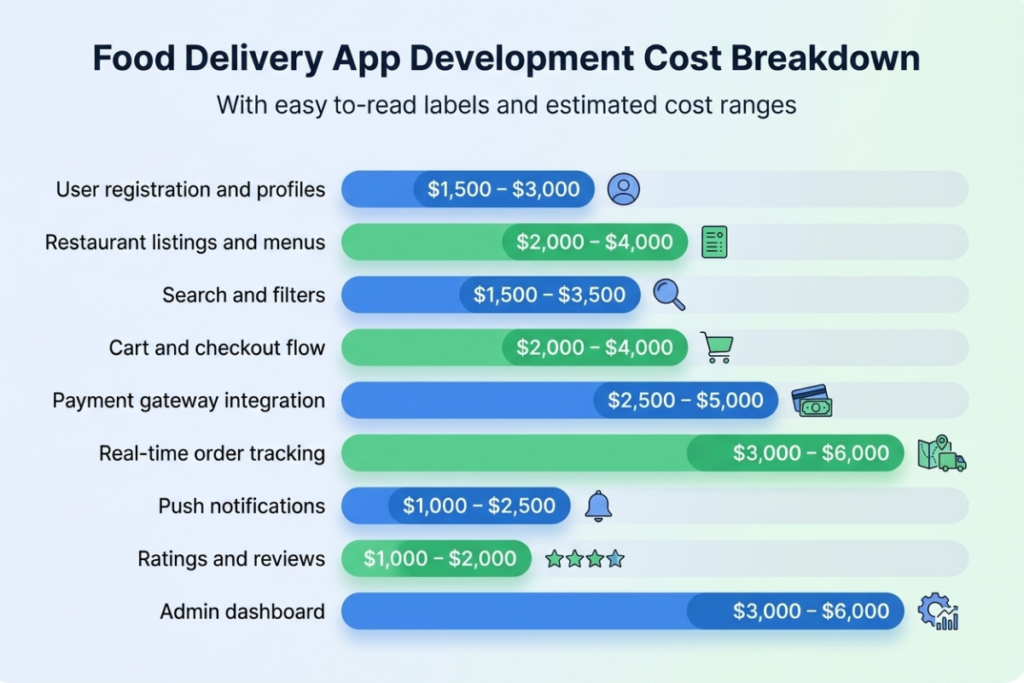
Total MVP estimate: $18,000 – $36,000
This is a functional, launch-ready application. It will not have every feature Talabat has, but it will serve your early customers and validate your business model.
Advanced Features (Post-MVP / Scale Stage)
Once you validate the product, you add features that increase engagement and operational efficiency:
- AI-powered personalized recommendations
- Loyalty points and referral programs
- Multi-language and multi-currency support
- Subscription plans (like Talabat Pro)
- In-app live chat and support
- Advanced analytics for restaurant partners
- Dark store or cloud kitchen integration
Adding these advanced features typically adds $20,000 – $50,000+ to your total app development cost.
Factors That Directly Affect Your App Development Cost
1. Development Approach: Custom vs. White-Label
A white-label food delivery solution costs less upfront ($10,000 – $20,000) but limits customization and branding. A custom-built application starts at $25,000 and scales based on complexity. For businesses targeting Dubai’s competitive market, custom development provides the flexibility to stand out.
2. Platform: iOS, Android, or Cross-Platform
Building natively for both iOS and Android nearly doubles the development time. Cross-platform frameworks like Flutter and React Native let you build once and deploy on both, saving 30–40% of mobile app development costs while maintaining near-native performance.
3. Tech Stack and Third-Party Integrations
Payment gateways (Stripe, PayTabs, Telr for UAE), Google Maps API for real-time tracking, Firebase for push notifications each integration adds development hours. The UAE market also requires compliance with Tabby, Apple Pay, and local payment methods, which adds an extra layer of work.
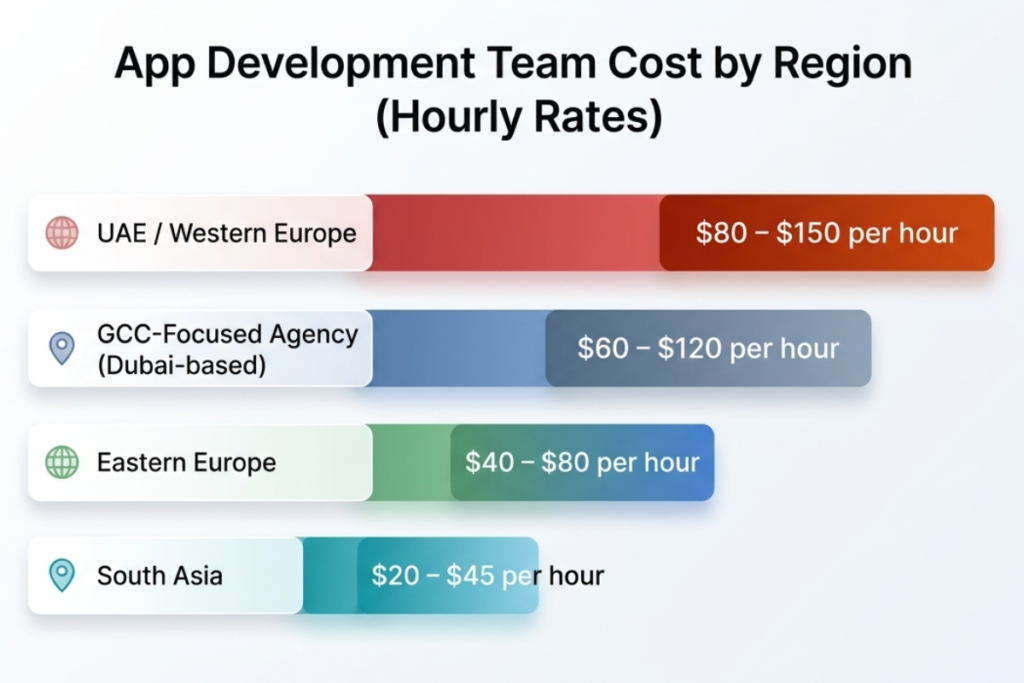
4. Development Team Location
| Development Region | Average Hourly Rate |
| UAE / Western Europe | $80 – $150/hour |
| Eastern Europe | $40 – $80/hour |
| South Asia | $20 – $45/hour |
| GCC-Focused Agency (Dubai-based) | $60 – $120/hour |
At Logic Works, we serve startups and Dubai-based businesses with transparent pricing and full-cycle development from UI/UX design to post-launch support.
5. UI/UX Design
Design is not a luxury; it is a conversion driver. A well-designed food delivery app reduces cart abandonment and increases repeat orders. Budget $5,000 – $15,000 for professional UI/UX design that matches the expectations of Dubai’s digitally sophisticated users.
6. Backend Infrastructure and Hosting
A scalable backend that handles peak-hour order surges requires proper architecture — typically built on AWS, Google Cloud, or Azure. Factor in $500 – $2,000 per month for cloud infrastructure, particularly as your user base grows.
Total App Development Cost: Realistic Estimates by Stage
| Development Stage | What You Get | Estimated Cost |
| MVP (Basic Food App) | 3 panels, core features, single platform | $18,000 – $35,000 |
| Mid-Range Product | Dual platform, real-time tracking, payment integration | $35,000 – $70,000 |
| Full-Scale Platform | Advanced features, AI recommendations, analytics | $70,000 – $150,000+ |
These figures assume a professional development agency with experience in the GCC market. Freelancers may quote lower but typically lack the infrastructure, quality assurance, and post-launch support a scaling business needs.
Hidden Costs Startups Often Overlook
Beyond the initial build, factor in these ongoing costs:
- App store fees — Apple charges $99/year; Google charges a one-time $25 fee.
- Maintenance and updates — Budget 15–20% of your development cost annually for bug fixes, OS updates, and feature improvements.
- Marketing and user acquisition — Launching without a go-to-market plan is one of the most common mistakes. Budget accordingly.
- Legal and compliance — UAE data protection laws and payment compliance add regulatory costs.
How Logic Works Approaches Food Delivery App Development
At Logic Works, we have built digital products for startups and established businesses across the UAE and GCC. We understand what the Dubai market expects — in terms of speed, design quality, and scalability.
Our food delivery app development service covers:
- Custom Android and iOS app development
- Real-time order tracking and GPS integration
- Secure UAE-compatible payment gateway setup
- Restaurant and delivery partner panel development
- Post-launch maintenance and performance monitoring
We work transparently. Before a single line of code is written, we give you a detailed scope, timeline, and cost estimate so there are no surprises.
Final Thoughts
Understanding your food delivery app development cost upfront prevents costly mistakes later. Whether you are a first-time founder or a restaurant group looking to launch your own ordering platform, the smartest move is to partner with a development team that understands both the technology and the Dubai market.
At Logic Works, we build scalable, user-focused digital products for startups and growing businesses across the UAE and GCC. If you are ready to move from idea to launch, let’s talk.
Get a Free Quote from Logic Works →
FAQs
Q1. How much does it cost to build a food delivery app like Talabat from scratch?
A full-scale food delivery app similar to Talabat with customer, restaurant, and driver panels, real-time tracking, and payment integration typically costs between $70,000 and $150,000+. An MVP version with core features can be launched for $18,000 – $35,000, which is a smart starting point for startups testing the market.
Q2. How long does it take to develop a food delivery app?
A basic MVP takes 3–5 months to develop. A full-featured platform with advanced capabilities can take 8–12 months. Timeline depends on feature complexity, team size, and revision cycles.
Q3. Is cross-platform development (Flutter/React Native) a cost-effective option for food delivery apps?
Yes. Cross-platform development reduces mobile app development costs by 30–40% compared to building separate native iOS and Android apps. For startups with budget constraints, this is the recommended approach without compromising performance.
Q4. What ongoing costs should I expect after launching my food delivery app?
Post-launch, budget for cloud server hosting ($500–$2,000/month), annual app maintenance (15–20% of build cost), payment gateway transaction fees, and digital marketing spend. These recurring costs are essential for keeping the app running and growing.
Q5. Can I build a food delivery app in Dubai that competes with Talabat?
Direct head-to-head competition with Talabat is difficult, but a focused niche strategy works well. Apps targeting specific cuisines, premium restaurant segments, or underserved residential areas in Dubai have successfully carved out profitable markets. The key is a clear value proposition and a well-built product.