
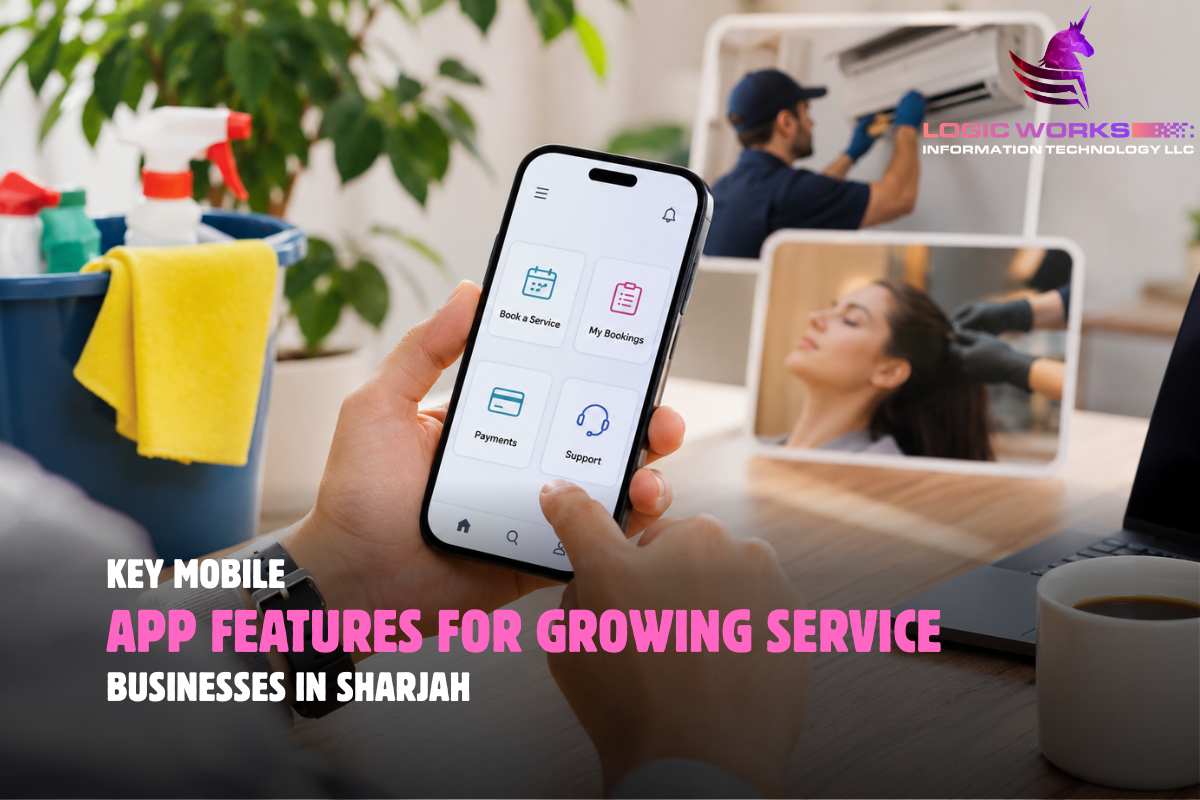

Running a service business becomes more complicated as customer demand increases. Appointments overlap, employees need regular updates, and customers expect quick responses. Whether a company provides cleaning, maintenance, beauty treatments, or professional services, managing everything through phone calls and spreadsheets can become difficult. Working with an App Development Company in Sharjah may help businesses explore digital solutions, but the real priority is understanding which mobile app features will make everyday operations easier for employees and customers.
A successful business application does not need dozens of advanced features. It needs practical tools that support reliable service delivery, simplify communication, and help the company manage growth without unnecessary complexity.
Why Do Growing Service Businesses Need Mobile Apps?
Mobile apps help service businesses organize customer interactions, appointments, employee assignments, and operational information in one accessible system.
As a company expands, manual coordination becomes harder. A small cleaning business might manage five daily appointments through messaging apps, but handling dozens of bookings across multiple teams requires a more organized process.
A mobile application can reduce repetitive administrative tasks, improve access to information, and provide customers with a more convenient way to request services.
However, the benefits depend on choosing features that address actual business problems rather than following technology trends.
1. Online Appointment Booking and Scheduling
Appointment scheduling is one of the most useful mobile app features for service-based businesses.
Customers should be able to view available time slots, choose services, and confirm bookings without repeatedly contacting staff.
How Does Mobile Appointment Booking Improve Business Operations?
Mobile booking systems allow customers to schedule, reschedule, and cancel appointments through a digital interface. When connected to employee availability, these systems can help businesses avoid overlapping reservations, reduce administrative work, and maintain more accurate schedules.
For example, a Sharjah-based salon could allow customers to choose treatments, select preferred staff members, and receive appointment confirmations.
Important booking features include:
- Real-time appointment availability.
- Automated booking confirmations.
- Rescheduling and cancellation options.
- Staff calendar integration.
- Appointment reminders.
Businesses should also establish clear cancellation policies and display them before customers confirm bookings.
2. Customer Profiles and Service History
Understanding previous customer interactions helps businesses provide more consistent service.
A customer management feature can store relevant contact details, appointment history, service preferences, and previous requests.
For example, an air conditioning maintenance company could maintain records of earlier service visits, equipment details, and completed repairs.
When customers request another appointment, technicians can review the available history rather than asking the same questions again.
What Information Should a Customer Management System Store?
Businesses should collect only the information necessary to provide their services.
Useful records may include customer contact preferences, service history, active requests, and relevant appointment details.
Customer information must be handled securely and in accordance with applicable UAE data protection requirements, including Federal Decree-Law No. 45 of 2021 on the Protection of Personal Data where applicable.
A customer database should improve service quality without collecting unnecessary personal information.
3. Secure Mobile Payments and Digital Invoicing
Customers often prefer a straightforward payment process with clear pricing and accessible receipts.
Mobile applications can support payment collection, invoice generation, and transaction records through suitable payment integrations.
For example, a home cleaning company could issue an invoice after a completed appointment and allow customers to pay through an integrated payment provider.
Which Payment Features Should Service Apps Include?
A useful payment system should display service charges clearly, support appropriate payment methods, and provide confirmation after a successful transaction.
Businesses may also benefit from:
- Digital invoices and receipts.
- Payment status tracking.
- Refund request workflows.
- Secure payment gateway integration.
- Accessible transaction history.
Payment information should be processed through trusted providers using appropriate security controls. Businesses should also consider applicable UAE tax and invoicing requirements.
4. Push Notifications and Service Updates
Timely communication helps customers understand what is happening with their bookings.
Push notifications can provide appointment reminders, booking confirmations, technician arrival updates, and service completion messages.
For example, a Sharjah appliance repair business could notify customers when a technician is on the way.
This reduces uncertainty and may limit repeated calls asking for updates.
However, notifications should remain relevant.
Businesses should distinguish essential service messages from promotional content and respect customer notification preferences.
Sending too many unnecessary alerts can damage the experience the app is supposed to improve.
5. Employee Scheduling and Task Management
Growing service businesses often manage multiple employees across different locations.
A workforce management feature can help supervisors assign tasks, organize schedules, and monitor job progress.
How Can Mobile Apps Improve Field Service Management?
Field service management apps help businesses coordinate employees who work at customer locations. They can provide job details, customer instructions, appointment times, and completion updates through a shared system.
For example, a Sharjah maintenance company could assign technicians to different service requests and allow them to update job status from their phones.
Employees might also upload photographs, record materials used, or flag tasks requiring follow-up.
These features improve operational visibility without requiring managers to contact every employee individually.
6. In-App Customer Support and Feedback
Customer support should be easy to access when something goes wrong.
A mobile application can provide a clear way to ask questions, report service issues, and request assistance.
Useful support features include in-app messaging, support tickets, frequently asked questions, and service feedback forms.
For example, a customer who experiences a problem after a maintenance visit could submit a follow-up request with a description and photograph.
The business can then assign the issue to the appropriate team.
Feedback features also help identify recurring problems, such as delayed appointments or unclear service instructions.
The important part is responding to feedback, not simply collecting it.
7. Arabic and English Language Support
Sharjah businesses may serve customers with different language preferences.
Providing an accessible interface in Arabic, English, or both can make booking and service management easier for the intended audience.
Arabic support requires appropriate right-to-left interface design rather than basic text translation.
Navigation, icons, forms, and confirmation messages should be tested in each supported language.
For example, a booking form may need layout adjustments to remain easy to understand in Arabic.
Businesses should prioritize accurate service descriptions and clear instructions over unnecessary visual complexity.
8. Business Analytics and Performance Reports
As a service business grows, owners need reliable information to make operational decisions.
Mobile dashboards can summarize appointments, completed jobs, customer feedback, and employee workloads.
Which App Metrics Matter Most for Service Businesses?
The most useful metrics measure whether the business delivers services efficiently and consistently.
| Metric | What It Helps Businesses Understand |
| Booking completion rate | How easily customers finish reservations |
| Appointment cancellation rate | Scheduling and customer commitment patterns |
| Repeat booking rate | How often customers return |
| Average response time | Speed of customer support |
| Job completion time | Operational efficiency |
| Customer feedback | Common service strengths and problems |
For example, a cleaning business may discover that certain service areas experience more scheduling delays.
Managers can use this information to review staffing and travel arrangements.
Analytics should support practical decisions rather than produce reports that nobody uses.
9. Integration With Existing Business Systems
A mobile application becomes more useful when it connects with systems the business already relies on.
Depending on the company’s requirements, integrations may include accounting software, customer relationship management tools, calendars, payment providers, or inventory systems.
For example, a repair company could connect its service booking app with an inventory database so technicians can check replacement-part availability.
However, integrations introduce additional costs and maintenance responsibilities.
Businesses should prioritize connections that eliminate repetitive work or improve information accuracy.
Which Mobile App Features Should Businesses Prioritize First?
Not every feature needs to be included in the initial release.
A minimum viable product (MVP) is an early application version containing the essential functionality needed to serve users and test the product’s value.
For many service businesses, a practical feature roadmap might look like this:
| Development Stage | Recommended Features |
| Initial launch | Service listings, booking, customer accounts, confirmations |
| Operational improvement | Employee scheduling, invoicing, service history |
| Growth stage | Analytics, customer feedback, system integrations |
| Advanced stage | Loyalty programs, sophisticated automation, personalized recommendations |
The right order depends on the business model.
A field maintenance company may need technician assignment from day one, while a salon might prioritize appointment booking and staff availability.
The objective is to build around essential workflows before introducing advanced functionality.
How Can Sharjah Businesses Plan a Successful Service App?
Before beginning mobile app development, business owners should review their current customer journey and internal processes.
A practical approach includes:
- Identify recurring problems. Look for missed bookings, delayed responses, and disconnected records.
- Understand customer expectations. Determine which tasks customers would prefer to complete digitally.
- Prioritize essential features. Choose functions that address the most important operational challenges.
- Plan technical requirements. Consider security, integrations, performance, and future scalability.
- Test with employees and customers. Confirm that the app works in realistic situations.
- Improve after launch. Use feedback and performance data to guide updates.
At Logic Works Information Technology, effective software development begins with understanding business requirements and user behavior. A well-planned mobile application should support daily operations, remain easy to use, and adapt as business needs change.
Final Thoughts
The best mobile app features are the ones that solve everyday business problems.
For growing service businesses in Sharjah, appointment scheduling, customer records, employee coordination, payments, and reliable communication can provide a strong starting point.
Advanced features can be introduced as customer expectations and operational requirements evolve.
By prioritizing usability, security, and practical functionality, businesses can create mobile applications that support both customer satisfaction and long-term operational growth.
Frequently Asked Questions
What are the most important mobile app features for service businesses?
Common priorities include appointment booking, customer management, payment processing, notifications, employee scheduling, and customer support. The most important features depend on how the business delivers its services.
How can mobile apps help service businesses grow in Sharjah?
Mobile apps can help businesses handle more bookings, organize employee assignments, improve customer communication, and reduce repetitive administration. They support growth by making everyday processes easier to manage.
Do small service businesses need mobile apps?
Not every business needs a dedicated app. A mobile-friendly website or existing booking platform may be sufficient for smaller operations. Custom applications become more relevant when businesses require specialized workflows or frequent customer interactions.
Can a mobile app improve customer retention?
Yes, useful features such as convenient rebooking, service history, appointment reminders, and responsive support can encourage repeat interactions. Customer retention also depends on service quality and reliability.
Should service business apps support Arabic and English?
Language options should reflect the target audience. Arabic and English interfaces may help businesses serve a wider customer base, provided both versions are properly designed and tested.
What is the difference between a booking app and a field service management app?
A booking app primarily helps customers schedule services. A field service management app also supports employee assignments, job tracking, technician updates, and operational coordination.
How can businesses keep customer information secure in mobile apps?
Businesses should use secure authentication, appropriate access controls, encrypted connections, trusted payment providers, and responsible data collection practices. They should also review applicable UAE privacy requirements.