

Search Engine Optimization (SEO) is entering a new era as AI changes how Google understands and delivers search results. With Google AI Mode, traditional SEO is shifting from keyword tactics to intent-focused, AI-ready optimization.
Businesses that rely on organic visibility must now rethink their SEO approach to stay competitive. Google AI Mode focuses on context, relevance, user behavior, and high-quality content. Brands must adapt their digital strategies to stay visible in an AI-powered search landscape.
What is Google AI Mode?
Google AI Mode
Google AI Mode is Google’s AI-powered search experience. It uses machine learning, natural language processing (NLP), and generative AI. It gives smarter, context-aware answers right in the search results.
Instead of simply matching keywords, Google AI Mode:
- Understands user intent
- Interprets conversational queries
- Generates AI-powered summaries
- Prioritizes authoritative content
- Delivers personalized search experiences
This shift represents one of the biggest transformations in search history. Search is no longer about exact keyword matches, it is about meaning, context, and value.
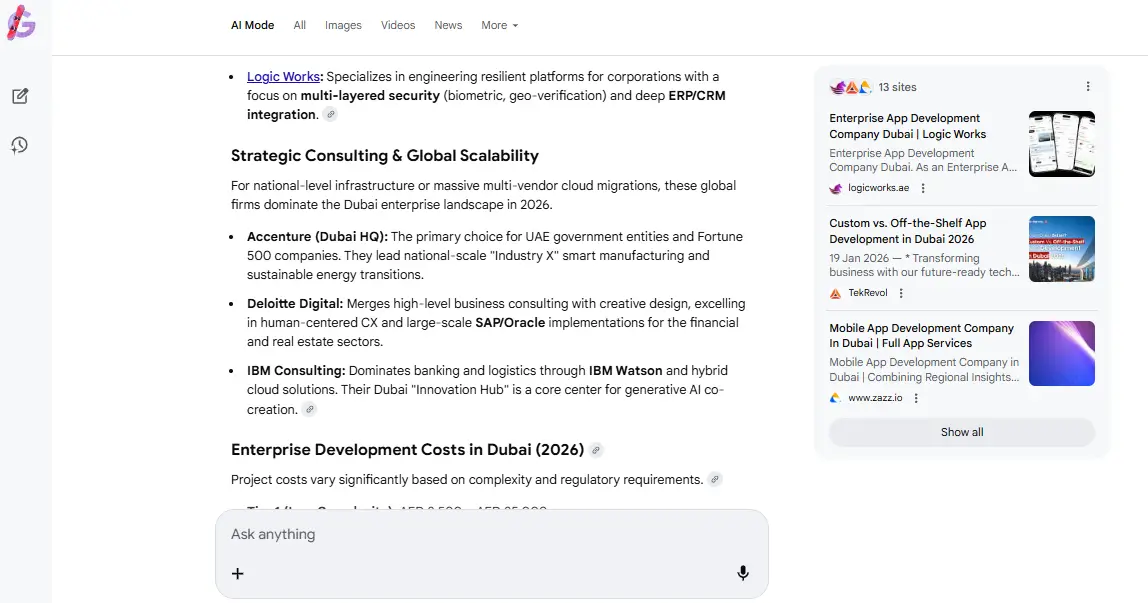
What does AI Mode look like?
Google AI Mode introduced visual and functional layout in search results. It often includes:
- AI-generated answer summaries at the top of search results
- Conversational follow-up prompts
- Source citations pulled from authoritative websites
- Context-aware search suggestions
- Structured content highlights
Typically, users see a large AI-generated response box above traditional organic listings. This summary answers the query directly while referencing trusted sources. Below it, users can explore traditional results, videos, featured snippets, and related searches.
How Google AI Mode Impacts SEO
Google AI Mode significantly changes how Search Engine Optimization (SEO) works. Here’s how:
1. Intent-Based Ranking
Google now prioritizes user intent over keyword density. Content must answer specific questions clearly and completely.
2. Semantic Search Optimization
AI understands synonyms, related terms, and context. This means content should be topic-focused rather than keyword-stuffed.
3. Authority and E-E-A-T
Experience, Expertise, Authoritativeness, and Trustworthiness (E-E-A-T) play a major role. Google AI Mode favors credible sources.
4. AI Snapshot Visibility
Appearing in AI-generated summaries requires:
- Structured content
- Clear headings
- Fact-based information
- High domain authority
5. User Experience Signals
Engagement metrics such as time on page, bounce rate, and click-through rates influence rankings more strongly.
Traditional Search vs Google AI Mode
| Feature | Traditional Search | Google AI Mode |
| Keyword Matching | Exact or close keyword match | Intent and semantic understanding |
| Results Display | List of blue links | AI summary + links |
| Query Type | Short-tail keywords | Conversational & long-tail queries |
| Ranking Factors | Keywords, backlinks, technical SEO | Authority, intent match, engagement, context |
| User Interaction | Click and explore | Direct answers + follow-up questions |
This shift means businesses must evolve their Search Engine Optimization (SEO) strategy to stay visible.
AI Digital Marketing
The Rise of AI Digital Marketing
AI Digital Marketing is transforming how brands connect with audiences. By using predictive analytics, automation, and machine learning tools, businesses can optimize campaigns in real time.
AI Digital Marketing helps companies:
- Analyze search behavior patterns
- Personalize user experiences
- Automate campaign optimization
- Improve keyword targeting
- Enhance conversion rates
In Google AI Mode, AI digital marketing helps match content to what people are searching for. It also uses signals from user behavior.
AI Digital Marketing and SEO Integration
To succeed in AI-driven search, businesses must combine AI Digital Marketing with Search Engine Optimization. This integration allows brands to:
- Identify emerging search trends
- Optimize for conversational queries
- Improve content personalization
- Enhance technical SEO performance
In competitive markets like the GCC, businesses that adopt AI digital marketing early gain a strong edge. They improve organic visibility and lead generation.
Content Strategy in the Age of Google AI Mode
1. Create Comprehensive Content
Long-form, in-depth content performs better in AI-powered search environments.
2. Answer Questions Clearly
Structure content around real search queries. Use headings that reflect common user questions.
3. Use Structured Data
Schema markup helps Google AI Mode understand entities, relationships, and context.
4. Focus on Topic Authority
Build topic clusters rather than isolated blog posts.
5. Optimize for Conversational Queries
Voice search is growing. Write in natural language that mirrors how users speak.
At Logic Works, we guide businesses to align their SEO strategies with AI advancements and maintain sustainable organic growth.
Technical SEO in an AI-Driven Search Environment
Technical optimization remains essential. Google AI Mode still evaluates:
- Page speed
- Mobile responsiveness
- Core Web Vitals
- Secure HTTPS connections
- Crawlability and indexing
However, technical SEO must now support content clarity and user engagement. Search Engine Optimization (SEO) is no longer only about structure—it is about delivering meaningful value quickly.
Benefits of Adapting to Google AI Mode
Businesses that optimize for AI-powered search gain:
- Higher visibility in AI summaries
- Increased brand authority
- Better engagement metrics
- Improved conversion rates
- Sustainable long-term rankings
Logic Works helps brands update their digital strategies using technical expertise and AI marketing insights. This supports steady growth as search environments change.
The Future of Search Engine Optimization
The future of Search Engine Optimization will focus on:
- Entity-based search
- AI-assisted content creation
- Multimedia optimization
- Personalized search experiences
- Real-time behavioral analytics
Human creativity, research depth, and authenticity will remain key ranking factors. AI enhances search but original, valuable content wins trust.
Businesses that adapt early will dominate organic search performance in the coming years.
Conclusion
Google AI Mode represents a significant transformation in how search engines process and present information. Businesses must adapt their Search Engine Optimization (SEO) strategies to focus on intent, authority, structured data, and user engagement. By combining AI digital marketing with modern SEO, brands can stay competitive. They can also stay visible in AI-based search results.
As search continues to evolve, companies that prioritize quality, research-backed content, and intelligent optimization strategies will lead the future of digital visibility.
FAQs
What is Google AI Mode in search?
Google AI Mode is an AI-powered search enhancement that uses machine learning and generative AI to deliver contextual, intent-driven answers directly within search results.
How does Google AI Mode affect Search Engine Optimization (SEO)?
It shifts SEO focus from keyword density to user intent, content authority, semantic relevance, and user engagement metrics.
Is traditional SEO still important?
Yes. Technical SEO, backlinks, and structured content remain important, but they must align with AI-driven intent analysis.
How can businesses optimize for AI-generated summaries?
Businesses should create trusted, well-structured, fact-based content. Use clear headings, schema markup, and strong E-E-A-T signals.
What role does AI Digital Marketing play in SEO success?
AI Digital Marketing enhances SEO by analyzing user behavior, identifying trends, automating optimization processes, and improving personalization strategies.