
Building successful software requires more than just writing code. A structured development approach helps businesses transform ideas into reliable digital solutions that solve real problems and support long-term growth. The Custom Software Development Process involves multiple stages, including planning, design, development, testing, deployment, and continuous improvement.
Unlike ready-made software, customized solutions are created around specific business goals, user requirements, and operational challenges. Understanding each stage of development helps businesses make better decisions and build software that delivers real value.
Learn how customized solutions support businesses: [Custom Software Development Company]
What Is the Custom Software Development Process?
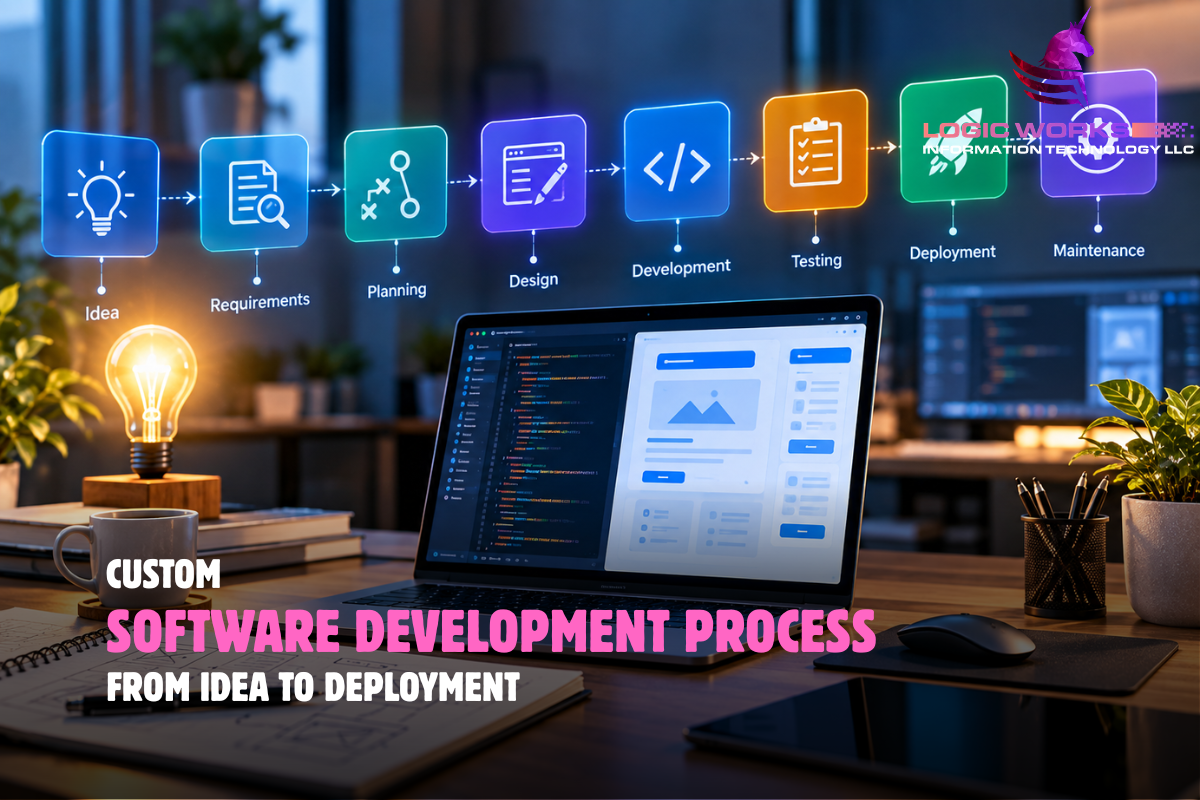
The custom software development process is a step-by-step approach used to create software designed specifically for a business. It starts with understanding business requirements and ends with launching a fully functional solution.
The main stages include:
- Requirement analysis
- Planning and strategy
- Software design
- Development
- Testing and quality assurance
- Deployment
- Maintenance and updates
Each stage plays an important role in ensuring the final product meets business expectations and provides a smooth user experience.
Step 1: Understanding Business Requirements
The first stage focuses on understanding the business, its challenges, and its objectives.
A development team works closely with stakeholders to identify:
- Business goals
- Target users
- Required features
- Existing system challenges
- Expected outcomes
This stage creates a clear foundation for the entire project. Without proper planning and requirement analysis, software may fail to solve the actual problems businesses face.
A professional development partner focuses on understanding the purpose behind the software instead of only focusing on technical requirements.
Step 2: Planning the Software Solution
After collecting requirements, the next step is creating a detailed project plan.
During this stage, teams define:
- Project scope
- Technology requirements
- Development timeline
- Budget considerations
- User experience goals
Proper planning helps avoid unexpected challenges during development and ensures everyone involved understands the project direction.
A clear roadmap also allows businesses to track progress and make informed decisions throughout the project.
Step 3: Designing the User Experience and Interface
A successful software solution should not only work well but also be easy to use.
The design stage focuses on creating interfaces that provide a simple and effective user experience. Designers create layouts, user flows, and prototypes before development begins.
Important design considerations include:
- Easy navigation
- Mobile responsiveness
- Clear information structure
- User-friendly features
- Consistent visual design
Good software design improves user satisfaction and makes digital platforms easier to adopt.
Step 4: Software Development and Implementation
During the development phase, programmers transform approved designs into a working software solution.
Developers build:
- Front-end interfaces
- Back-end systems
- Databases
- APIs
- Third-party integrations
The development approach depends on the project requirements. Some businesses need web platforms, while others require mobile applications or enterprise systems.
Working with an experienced Custom Software Development Company helps businesses create solutions that are secure, scalable, and aligned with their objectives.
Step 5: Testing and Quality Assurance
Testing is one of the most important stages of software development. Before launching, the software must be checked for performance, security, usability, and reliability.
Quality assurance teams test different areas, including:
Functional Testing
Ensures all features work according to requirements.
Performance Testing
Checks how the software performs under different conditions.
Security Testing
Identifies possible vulnerabilities and protects business data.
User Experience Testing
Ensures the software provides a smooth experience for users.
Thorough testing reduces errors and improves software reliability after launch.
Step 6: Deployment and Software Launch
After successful testing, the software moves toward deployment.
During this stage, the development team prepares the system for real users. This may include:
- Server setup
- Data migration
- User account configuration
- Final performance checks
A professional launch process ensures minimal disruption and allows businesses to start using their new solution effectively.
Step 7: Maintenance and Continuous Improvements
Software development does not end after deployment. Businesses often require updates, improvements, and technical support as their needs evolve.
Maintenance services may include:
- Security updates
- Performance improvements
- New feature development
- Bug fixes
- System monitoring
Continuous improvements help software remain effective and competitive over time.
How Long Does Custom Software Development Take?
The timeline for software development depends on various factors, including:
- Project complexity
- Number of features
- Platform requirements
- Integration needs
- Testing requirements
A simple application may require less time, while a complex enterprise platform can take several months to complete.
Proper planning and communication help maintain a realistic timeline and improve project outcomes.
Why Is a Structured Development Process Important?
A well-defined process helps businesses achieve better results by reducing risks and improving collaboration.
Key advantages include:
Better Project Management
Clear stages make it easier to monitor progress, manage resources, and maintain project direction.
Higher Software Quality
Testing and quality checks ensure the final product performs reliably.
Reduced Development Risks
Early planning helps identify challenges before they become major issues.
Better Business Alignment
A structured approach ensures the software supports actual business objectives.
How Logic Works Approaches Software Development
Logic Works Information Technology follows a practical development approach focused on creating solutions that match business requirements. The team combines planning, design, development, and testing to build reliable digital platforms.
By focusing on user needs and business goals, Logic Works helps organizations develop software solutions that support efficiency, growth, and digital transformation.
Final Thoughts
The custom software development process transforms business ideas into practical digital solutions through careful planning, development, testing, and continuous improvement.
Each stage contributes to creating software that is secure, scalable, and aligned with business needs. Whether a company requires automation tools, customer platforms, mobile applications, or enterprise systems, following a structured development process helps achieve better results.
Choosing the right development partner ensures businesses can build technology solutions that support their current goals while remaining adaptable for future growth.